

Mullumbimby Couch
Cyperus brevifolius
A creeping sedge that invades lawns, forming dense mats with distinctive round green-white seedheads that mowing won't remove.
Mullumbimby couch (also called globe sedge or Kyllinga) is a low-growing perennial sedge, not a true grass, that spreads by wiry rhizomes and stolons just below or at the soil surface. It forms a dense, tangled mat that can crowd out lawn grasses over time, particularly in warm, moist conditions typical of coastal and subtropical parts of Australia.
The leaves are bright to mid-green, glossy, and folded with a distinct central crease, giving the foliage a slightly V-shaped cross-section typical of sedges. Stems are triangular in cross-section (the classic sedge giveaway) rather than round like grass stems. Leaves and stems usually sit flatter and denser than surrounding turf, creating visible patches of a different texture and colour.
Its most recognisable feature is the seedhead: a small, round to globe-shaped white-green cluster sitting just above the leaves on a short stalk, quite different from typical grass seedheads. These appear through the warmer months and persist even after mowing, since the plant sets seedheads low to the ground.
It's a serious lawn weed in home gardens because it tolerates regular mowing, spreads aggressively via both rhizomes and seed, and establishes readily in moist, poorly drained or compacted soil. It's commonly found in couch, buffalo and kikuyu lawns across the eastern seaboard, especially in Queensland and northern New South Wales, though it can turn up further south in warm, damp microclimates.
Management relies on improving lawn density and drainage to reduce the conditions it favours, hand-removal of small patches (making sure to dig out the rhizome network, as fragments can regrow), and avoiding over-watering which encourages spread. Persistent or larger infestations are difficult to control by mowing or hand-pulling alone and often need a sustained control program.
How to identify
Look for these signs in lawn areas, particularly damp, shaded or poorly drained spots:
- Patches of different texture: denser, glossier, more upright clumps of foliage that stand out from the surrounding lawn grass.
- Triangular stems: roll a stem between your fingers — true grasses are round, sedges like this one are distinctly three-sided.
- Round white-green seedheads: small globe-shaped clusters sitting low in the turf, present even after mowing.
- Rhizomes at the surface: gently part the mat or dig a small section to reveal a network of shallow, wiry underground runners.
- Persistence after mowing: patches regrow quickly and seedheads reappear within days of cutting.
Lookalikes: Nutgrass (Cyperus rotundus) is a similar sedge but has purplish-brown seedheads on taller stems and forms underground nutlets/tubers rather than a low creeping mat. Common couch grass runners can look similar when young, but couch has round stems and lacks the globe-shaped seedhead. Checking stem shape and seedhead form is the quickest way to confirm Mullumbimby couch.
Registered products we stock

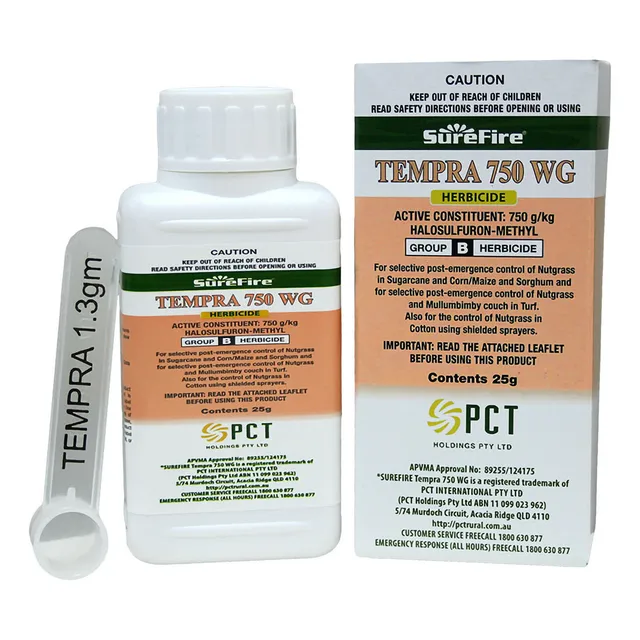

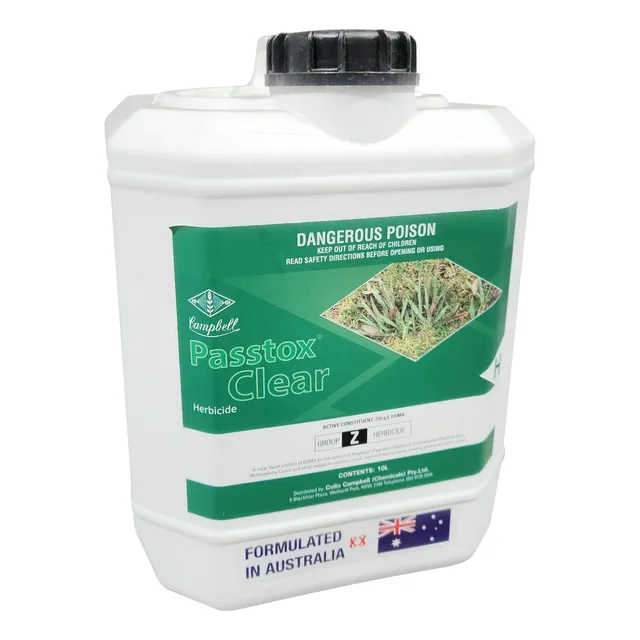
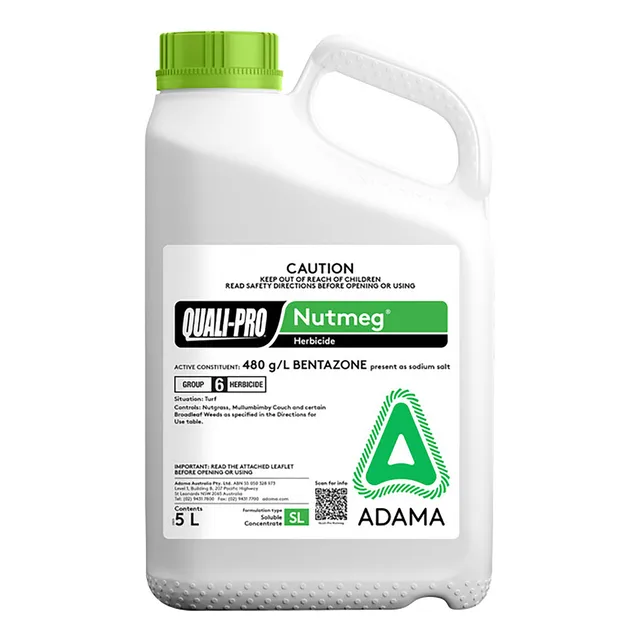

No products match those filters.