


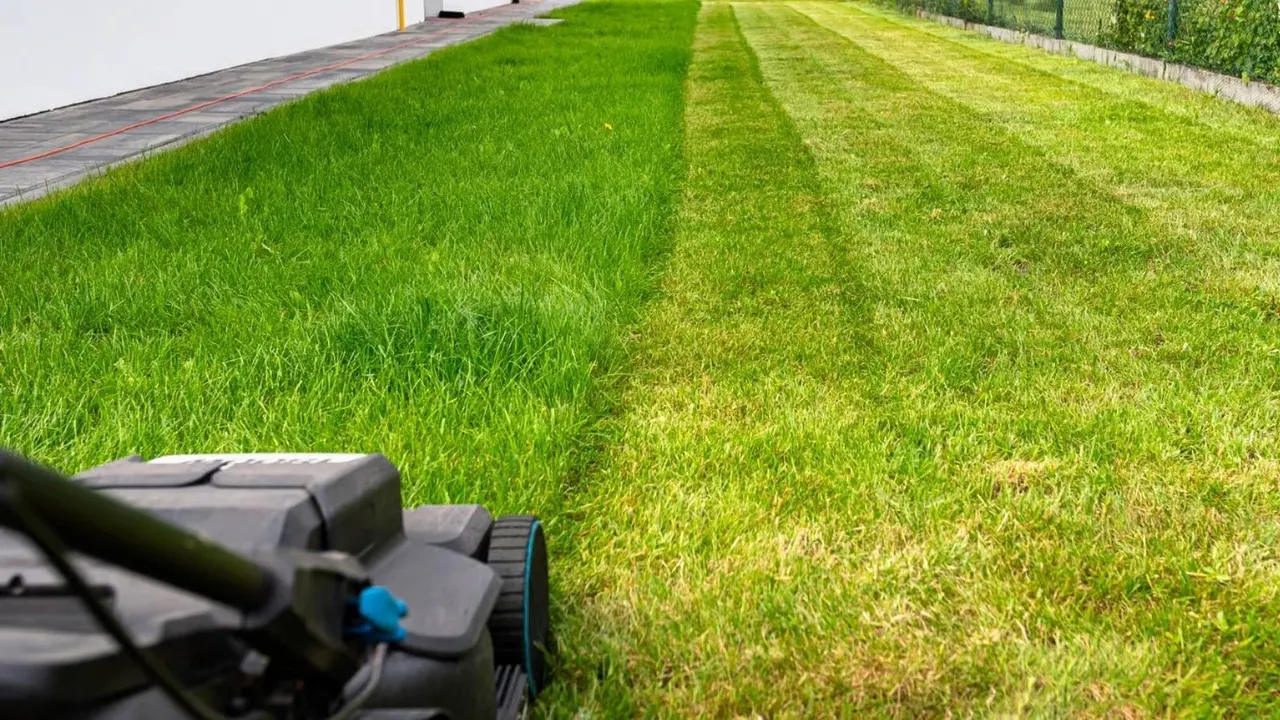
September is the shortest working window in the lawn year.
Short answer: mow low, dethatch, aerate if compacted, wet the soil, then apply your lawn fertiliser. Do those five jobs in that order and the feed reaches the root zone. Do them in any other order, or skip straight to the fertiliser, and most of the bag never gets past the thatch layer.
Warm-season lawns wake on soil temperature, not on the calendar. Once that threshold is crossed you have a short window to reset the lawn before summer heat closes it. The products matter far less than the sequence, because each of these five jobs removes a barrier that would otherwise block the next one.
Before you start: is your lawn actually awake?
Couch, kikuyu, buffalo and zoysia begin active growth once soil at around 100 mm holds consistently above roughly 14°C, and they only reach full pace closer to 18°C. That creates a real gap across the eastern states.
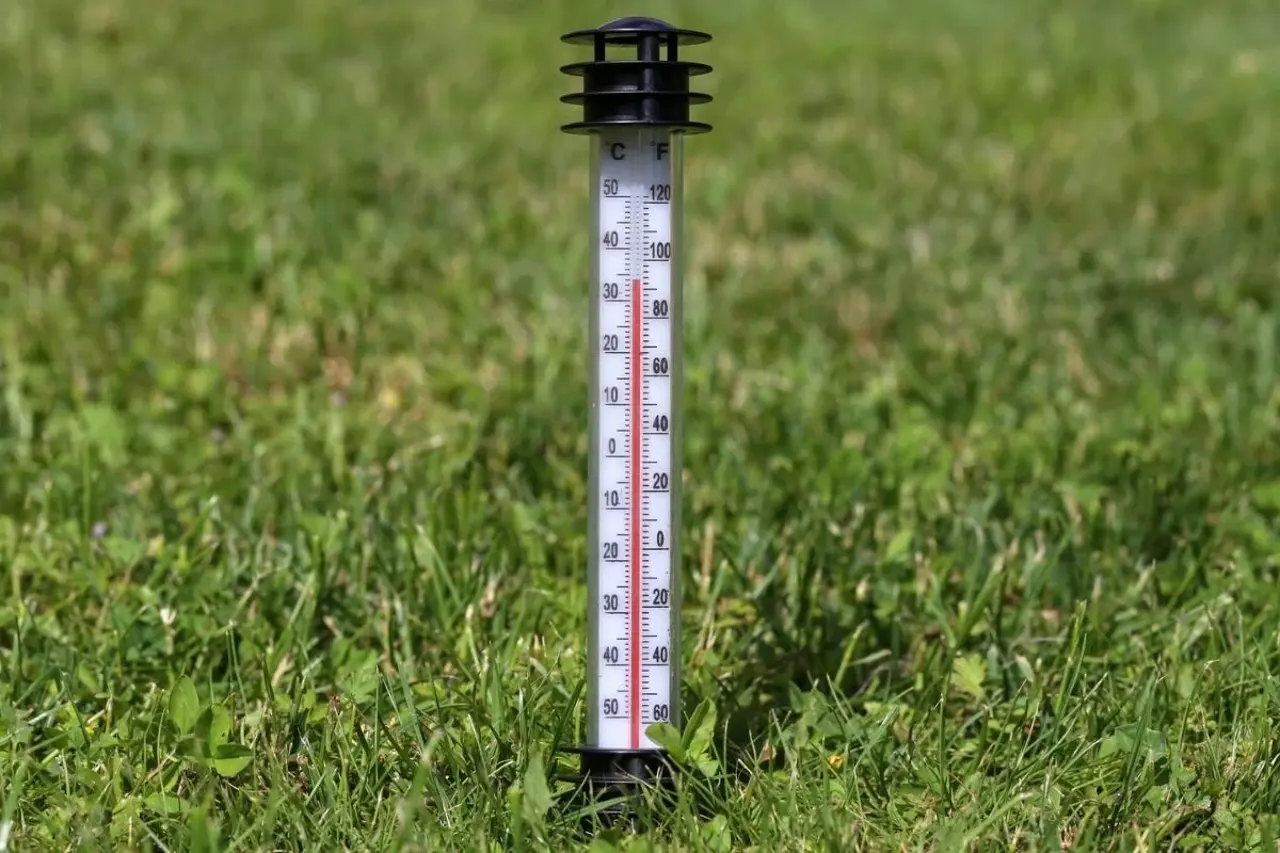
Soil at 100 mm holding above 14°C is the signal to start. Typical start of the spring reset window by region
| ||
Region | Usual window | What to do in early September |
|---|---|---|
| ||
South-east Queensland, northern NSW | Late August to early September | Start now |
| ||
Sydney and coastal NSW | Mid to late September | Prepare, start in a fortnight |
| ||
ACT and inland NSW | Late September to October | Wait |
| ||
Melbourne, Geelong, coastal Victoria | Mid to late October | Wait |
| ||
Inland and elevated Victoria | Late October onwards | Wait |
If you are in Victoria and you run this sequence in early September, you scalp a lawn with no capacity to regrow, on soil too cold to use the fertiliser you have just applied. The lawn stays thin and open to weeds for six weeks.
A soil thermometer settles it. Take a reading mid-morning at 100 mm depth across a few consecutive days. When it holds above 14°C, begin. You can also check how wet the profile is in your area using the Bureau of Meteorology's Australian Landscape Water Balance, which reports root-zone soil moisture down to a 5 km grid.
The five jobs, in order
Mow low and catch the clippings, at a depth set by your grass type.
Dethatch, so fertiliser can reach soil rather than lodging in dead material.
Aerate, but only if the soil is genuinely compacted.
Apply a wetting agent and water in deeply, so the profile can take water again.
Apply your lawn fertiliser, choosing a recovery program rather than a maintenance feed.
Job 1: Mow low and catch the clippings
Winter leaves a layer of pale, tired leaf sitting over the base of the plant, blocking light and warmth from reaching the soil and the growing points. Take the height down and catch the clippings rather than mulching them back, because the point of the job is to get that material off the lawn entirely.
How low depends entirely on what you are growing.

Catch the clippings. The job is to get the old growth off the lawn, not back into it.
Cutting depth and dethatching tolerance by grass type
| ||||||||
Grass | Growth habit | Spring cut | Dethatching tolerance | |||||
|---|---|---|---|---|---|---|---|---|
| ||||||||
| Couch (Santa Ana, Legend, Wintergreen, TifTuf) |
| Rhizomes and stolons |
| Hard cut, lowest setting that will not gouge |
| High. Recovers quickly from aggressive verticutting |
|
| ||||||||
| Kikuyu (Eureka, Kenda) |
| Rhizomes and stolons, very vigorous |
| Hard cut |
| Highest. Builds thatch faster than anything else and usually needs it |
|
| ||||||||
| Buffalo (Sir Walter, Sapphire, Palmetto) |
| Stolons only, no rhizomes |
| One or two notches down. Never scalp |
| Low. Rake to lift debris, do not verticut hard |
|
| ||||||||
| Zoysia |
| Rhizomes and stolons, slow growing |
| Moderate reduction |
| Moderate, but slow to fill back in |
|
Buffalo deserves the emphasis. It has no rhizomes, so everything it uses to recover sits above ground in its stolons. Scalp it and you remove the machinery it needs to regrow. Couch and kikuyu both run underground and will come back thicker for a hard cut.
Take the height down over two cuts a few days apart rather than one brutal pass. The lawn will look worse before it looks better, which is exactly why this job goes first.
Job 2: Dethatch, and why feeding first wastes your fertiliser
Thatch is the spongy mat of dead stems, stolons and root material sitting between the green leaf and the soil surface. A layer under about 10 mm is useful insulation. Past roughly 12 mm it becomes a barrier, and this is the single step that decides whether your lawn fertiliser does anything at all.
Spread granular fertiliser onto thick thatch and the granules never reach soil. Two things follow. Nitrogen that sits on the surface rather than in contact with soil is lost to the air as ammonia gas instead of taken up by roots, a process called volatilisation. NSW Department of Primary Industries trials on grass pastures recorded losses averaging around a quarter of the nitrogen applied where broadcast urea was held up in thatch and never contacted the soil. Ground cover, low soil contact and dry surface conditions all increase those losses. Second, thatch is itself water repellent, so watering in does not carry nutrients through the way you expect.
You end up paying for a bag of fertiliser to feed a layer of dead material.
There is a second reason to dethatch before you feed. Feed first and you produce a flush of new growth, then rip through it with a dethatcher a fortnight later. You have paid for growth in order to remove it.
How to check your thatch depth
Cut a wedge out of the lawn with a spade, around 75 mm deep, and look at the profile side-on. You will see green leaf, then a brown mat, then soil. Measure the brown layer. Under 10 mm, leave it. Over 12 mm, act.

Green leaf, brown thatch mat, then soil. The middle band is what you are measuring.
How hard to go, and when
Timing matters as much as technique. A light dethatch or a rake-out is appropriate in early September in south-east Queensland. Aggressive verticutting or scarifying is better held until the lawn is growing strongly, which for most warm-season lawns means October through December. Do not scarify or scalp hard after January, because the lawn will not have time to recover before it slows again.
Kikuyu and couch: verticut or scarify in a cross-hatch pattern once growth is active. Both recover fast.
Buffalo: use a dethatching rake to lift and remove dead leaf. If the thatch is genuinely thick, take it back over two seasons rather than one pass.
Zoysia: dethatch lightly and expect slow fill-in.
Whatever method you use, remove the debris afterwards. Leaving it on the surface recreates the barrier you have just spent an afternoon removing.
Job 3: Aerate, but only if the soil is compacted
Not every lawn needs this every year. Test it first: push a screwdriver into moist soil. If it slides in to 100 mm, skip this step. If you have to lean on it, or the lawn puddles after rain, or it carries constant foot traffic, aerate.
Core aeration is the better option because it pulls plugs out. Solid-tine punching pushes soil sideways and adds compaction to the walls of each hole. Without a corer, a garden fork works: push in around 100 mm, rock gently to open a gap, and repeat every 100 to 150 mm across the affected areas. Leave the cores on the surface to break down, or drag them in with the back of a rake.
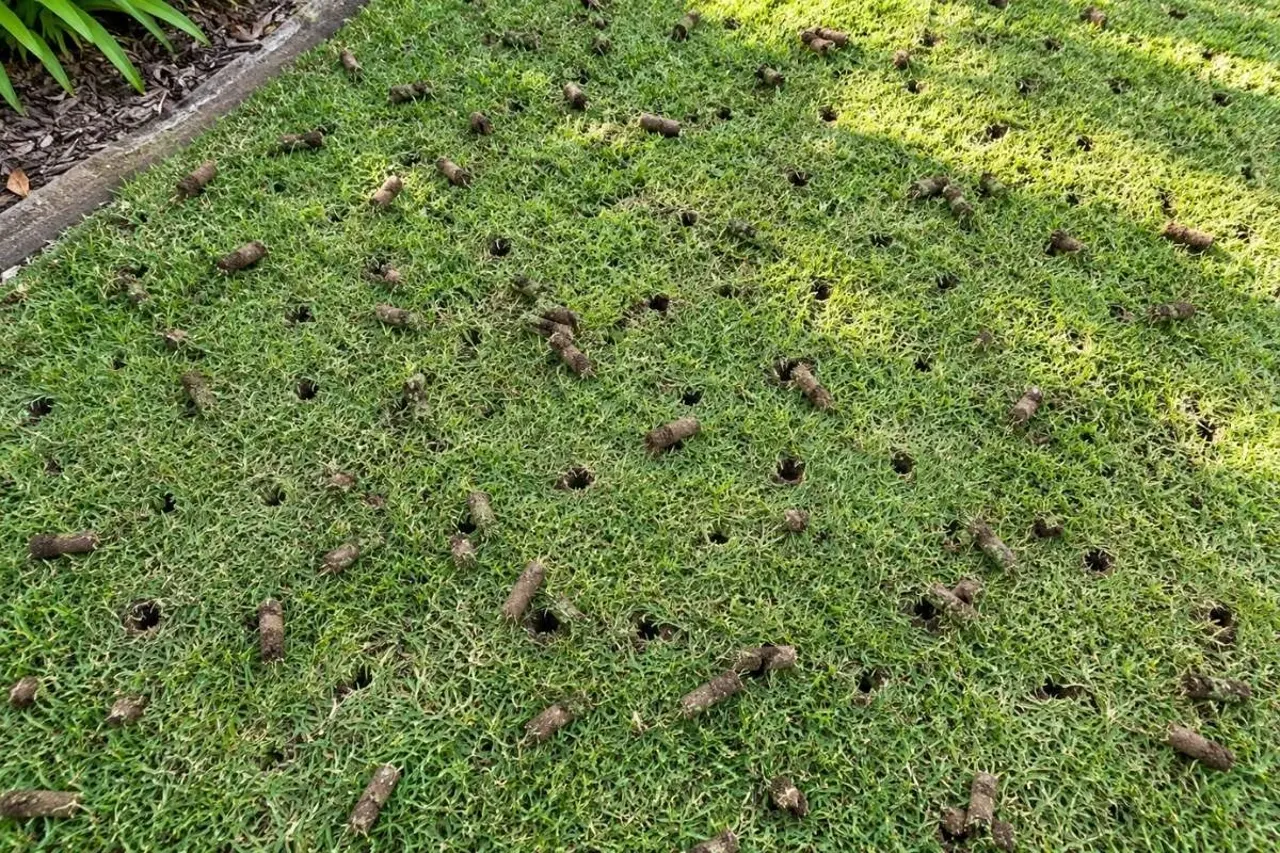
Coring pulls plugs out. Solid-tine punching pushes soil sideways and adds compaction.
Compacted soil holds water at the surface, keeps oxygen away from roots, and stops the next two steps reaching anywhere useful.
Job 4: Restore the soil's ability to take water
After a dry winter, many Australian soils become water repellent. Waxy organic compounds derived from the breakdown of plant material coat the soil particles, and the profile starts shedding water instead of absorbing it. The effect is strongest in sandy surface soils, where a small amount of waxy coating covers a large proportion of the particle surface. You can run a sprinkler for twenty minutes, dig down 50 mm and find dust.
Feeding into that soil wastes the feed twice: the nutrients are not carried down, and the roots do not have the moisture to use them even if they were.

FloraTech AquaFix granular wetting agent, from $46.60.
FloraTech AquaFix is a granular wetting agent built on natural New Zealand zeolite, so it does two jobs at once. The non-ionic surfactant reduces water surface tension so water penetrates and spreads evenly rather than running off. The zeolite base then holds moisture and nutrients in the root zone instead of letting them leach past. Granular application also means you can spread it dry and water it in whenever suits, rather than timing a liquid spray.
Shop FloraTech AquaFix — 3 kg from $46.60, 20 kg for larger lawns.
Spread it, then water in with a proper deep soak rather than a light sprinkle.
Job 5: Now apply your lawn fertiliser
Cut back, dethatched, opened up and able to take water. This is the point at which fertiliser does what you paid for, because every granule now has a clear path to soil and roots that can use it.
The choice that matters here is recovery versus maintenance. Most retail lawn fertiliser is formulated to tick a healthy lawn over, which is the right product in January and the wrong one for a lawn coming out of winter thin and hungry. Maintenance rates do not drive recovery, and a fast soluble feed gives you a green-up that fades in a fortnight without building any root mass underneath it.
A spring reset needs three things running together:
Slow-release nitrogen, feeding for weeks rather than days, so growth is steady rather than a spike and a crash.
Sustained water movement into the root zone, which is why the wetting agent goes first and gets repeated partway through.
Root stimulation, so the plant builds the structure to survive summer instead of only producing leaf.

The EasyGreen Lawn Rescue Kit, an eight-week recovery program from $99.00.
The EasyGreen Lawn Rescue Kit runs all three as a scheduled eight-week program rather than three products you have to time yourself:
Combi Green Professional Turf Fertiliser, high-potency slow-release nitrogen, applied at Week 1 and Week 5
FloraTech AquaFix wetting agent, applied at Week 1 and Week 5
Seaweed Master liquid seaweed extract, sprayed weekly across all eight weeks for root growth and stress recovery
A printed application guide covering rates, mixing and the week-by-week schedule on one card
Kits are measured to lawn size, so you finish the program with empty containers rather than half-used bags in the shed.
EasyGreen Lawn Rescue Kit sizing
| |
Size | Lawn coverage |
|---|---|
| |
Small | Up to 100 m² |
| |
Medium | Up to 250 m² |
| |
Large | Up to 500 m² |
From $99.00. Suits buffalo, couch, kikuyu and zoysia. Safe for pets and kids once the granular products are watered in.
Not sure of your lawn size? Use our Lawn & Garden Size Calculator to work it out before you order.
Frequently asked questions
Should I fertilise my lawn before or after dethatching?
After. Fertiliser applied to a thick thatch layer lodges in dead material instead of reaching soil, where surface-applied nitrogen is lost to the air rather than taken up by roots. Dethatching first also avoids paying for a flush of growth that you then remove.
When should I apply lawn fertiliser in spring?
Once soil at 100 mm holds consistently above roughly 14°C, and after the lawn has been mown low, dethatched and treated with a wetting agent. In south-east Queensland that is usually early September. In Melbourne it is usually mid to late October.
Can I scalp a buffalo lawn?
No. Buffalo has no rhizomes and recovers entirely from above-ground stolons, so scalping removes the material it needs to regrow. Lower the mower one or two notches only and use a dethatching rake rather than a scarifier.
How do I know if my lawn has too much thatch?
Cut a wedge of turf about 75 mm deep with a spade and look at the profile side-on. Measure the brown mat between the green leaf and the soil. Under 10 mm is fine and useful. Over 12 mm needs removing.
Does my lawn actually need aerating every spring?
Not usually. Push a screwdriver into moist soil. If it reaches 100 mm without effort, skip aeration. Aerate if the lawn puddles after rain, carries heavy foot traffic, or the screwdriver test meets resistance.
Why does my lawn shed water instead of absorbing it?
Waxy organic compounds from breaking-down plant material coat soil particles and make the surface water repellent, which is most pronounced in sandy soils. A wetting agent reduces water surface tension so moisture penetrates and spreads evenly through the profile again.
What is the difference between a recovery lawn fertiliser and a maintenance one?
A maintenance feed is formulated to hold a healthy lawn steady. A recovery program combines slow-release nitrogen, a wetting agent and root stimulation at higher rates over a set schedule, which is what a lawn coming out of winter thin and patchy needs.
Further reading
What comes next
From October, watch for the first signs of lawn grub and armyworm activity. Warm, humid conditions bring them out and the damage moves faster than most people expect. Getting protection down before you see damage is considerably easier than repairing a lawn afterwards.
About the author
Patrick Gorman is an agronomist with The Garden Superstore, advising on turf nutrition, soil management and plant protection across Queensland, New South Wales, the ACT and Victoria. The Garden Superstore has supplied professional-grade lawn and garden products to Australian growers and homeowners for more than 45 years from its Yandina, Queensland base.
Questions about your lawn? Call 1800 670 790 or email sales@gardensuperstore.com.au.