

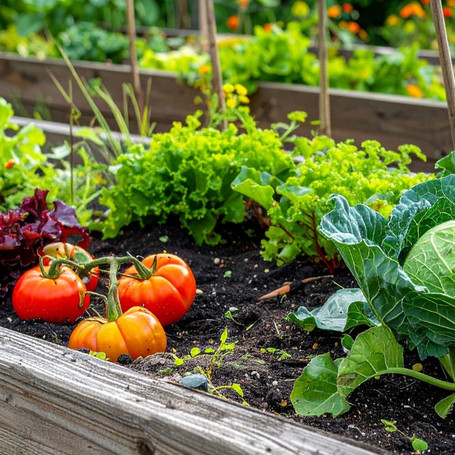
What to Plant in March in Australia: Your State-by-State Guide for 2026
March is one of the best planting months in Australia. The summer heat is easing, the soil is still warm (ranging from 25°C in Brisbane down to 18°C in Melbourne at 10cm depth), and conditions are ideal for establishing autumn and winter crops. What you can plant in March 2026 depends on your state. Queensland gardeners can still plant warm-season crops like beans, capsicum, corn, and tomatoes alongside cool-season starters. Victorian and Tasmanian gardeners should focus entirely on cool-season brassicas, root vegetables, and leafy greens, using seedlings rather than seed for slow-maturing crops. South Australian and Western Australian gardeners face dry, hydrophobic soils that need a wetting agent before anything will establish. This guide covers exactly what vegetables, herbs, and flowers to plant in March across every Australian state, along with soil preparation advice, days-to-harvest timelines, and the most common mistakes to avoid.
In This Guide
Why March Is the Most Important Planting Month Most Gardeners Waste
March is critical because the soil is still warm enough for seeds to germinate and seedlings to establish strong root systems, while the cooling air temperature means less heat stress, fewer pests, and lower water demands. According to the Bureau of Meteorology, March average daily highs range from 29°C in Brisbane to 24°C in Melbourne and 21°C in Hobart, making it the last month with reliable warmth in southern states.
Most home gardeners miss this window entirely. They leave their beds empty through March and April, then scramble to plant in May when the soil has already cooled and germination slows to a crawl. The result is weak seedlings, poor harvests, and a veggie patch that sits half-empty through the most productive cool-season months.
How to Prepare Your Soil Before Planting in March
Preparing soil for March planting involves three steps: clearing spent summer crops, replenishing nutrients with compost or manure, and applying a controlled release fertiliser. If your soil is hydrophobic or heavy clay, you will also need a wetting agent or gypsum before anything will establish properly.
Start by pulling out old tomato plants, cucumbers, and zucchinis. If they are disease-free, compost them. If they showed signs of fungal issues, bin them rather than composting.
Once your beds are clear, dig in compost or well-aged manure to replenish what the summer crops stripped out. If you are growing in pots or raised beds, refresh the top third of your growing media with a quality potting mix or coir blend. The GrowRite Cocopeat Coir Pith Block expands to around 60L from a 5kg block and holds up to eight times its weight in water, which makes it a practical and cost-effective option for refilling raised beds and large containers.
In our experience, refreshing the growing media is where most container gardeners go wrong. They replant into exhausted mix and wonder why nothing grows.
A controlled release fertiliser applied at planting time will feed your new crops for the next three to four months without any extra effort. For a faster green-up on leafy vegetables, add a liquid fertiliser at half strength once a fortnight after seedlings have established.
If your soil is heavy clay, work in gypsum and coarse organic matter to open up the structure. If it is sandy and hydrophobic (water beads on the surface instead of soaking in), apply a soil wetting agent before planting. We find this is one of the most overlooked steps in autumn planting, particularly in SA and WA where sandy, water-repellent soils are common after a dry summer.
Crops You Can Plant in March in Every Temperate State
Across NSW, VIC, SA, WA, and TAS, the core cool-season crops are the same. Rather than repeating an identical list under every state, here is the base planting list that applies to all temperate regions of Australia in March 2026, with typical days to harvest so you can plan your timeline.
| Crop | Type | Days to Harvest | Notes |
|---|---|---|---|
| Broccoli | Seedling | 80 to 110 | Plant as seedling, not seed, in southern states |
| Cabbage | Seedling | 90 to 120 | Needs full sun and rich, well-composted soil |
| Cauliflower | Seedling | 100 to 130 | Plant early March in VIC/TAS for winter harvest |
| Kale | Seedling or seed | 55 to 75 | One of the hardiest winter crops |
| Lettuce | Seed or seedling | 30 to 60 | Successive sowings every 2 to 3 weeks |
| Spinach | Seed | 40 to 50 | Grows fast in cool conditions |
| Beetroot | Seed | 55 to 70 | Sow direct, does not transplant well |
| Carrot | Seed | 70 to 90 | Sow direct into loose, stone-free soil |
| Radish | Seed | 25 to 40 | Fastest crop on this list |
| Peas | Seed | 60 to 80 | Needs trellis or support, fix nitrogen in soil |
| Broad beans | Seed | 90 to 120 | Sow direct, stake when tall |
| Asian greens | Seed or seedling | 30 to 50 | Bok choy, pak choi, tatsoi all do well |
| Silverbeet | Seed or seedling | 50 to 70 | Cut-and-come-again harvest for months |
| Spring onions | Seed or seedling | 60 to 80 | Snip tops as needed while bulbs develop |
| Rocket | Seed | 25 to 35 | Fast and easy, resow regularly |
The state sections below focus on what is different in each state: which additional crops you can grow, which ones to avoid, specific timing considerations, and climate-specific advice.
What to Plant in March in Queensland
Queensland is the exception to the cool-season rule. With March average highs of 29°C in Brisbane and 31°C in Townsville (BOM climate data), soil temperatures remain well above 20°C, which means warm-season crops are still viable alongside the cool-season starters listed above.
In SEQ (Brisbane, Gold Coast, Sunshine Coast), the humidity backs off in late March, creating ideal conditions for brassicas and leafy greens that would have bolted in February. Further north (Townsville, Cairns), you are essentially still in the warm-season window.
Additional crops for QLD (not available in southern states in March):
| Crop | Notes |
|---|---|
| Beans (climbing and dwarf) | Still warm enough for germination in QLD |
| Capsicum | Fruit will set before cooler nights arrive in May |
| Corn | Last chance sowing for SEQ, still viable in the north |
| Cucumber | North QLD only from March onwards |
| Eggplant | North QLD only |
| Tomatoes | Last chance in SEQ, still in season north of Bundaberg |
| Pumpkin | Sow now for autumn harvest |
Herbs: Basil (last chance), chives, coriander, dill, lemongrass, mint, oregano, parsley, thyme.
Flowers: Cosmos, marigolds, nasturtium, portulaca, sunflowers, zinnia.
What to Plant in March in New South Wales
NSW spans two very different climates. Coastal Sydney (average March high 26°C) and the north coast are still mild, while inland and southern NSW cool down fast. The base cool-season list above applies across the state, with these additions and differences.
Sydney and the coast still have time for a final sowing of climbing beans and warm-season herbs like basil, though fruit set will be marginal. Inland and southern NSW (Blue Mountains, Wagga, the ACT) should skip anything warm-season and go straight to brassica seedlings and root vegetables.
NSW-specific additions: Garlic (plant cloves late March, pointy end up, 5cm deep, 15cm apart), fennel, leek, parsnip, turnip.
Herbs: Chives, coriander, fennel, garlic, mint, oregano, parsley, rosemary, sage, thyme.
Flowers: Alyssum, calendula, cornflower, dianthus, pansy, poppy, snapdragon, stock, sweet pea (sow around St Patrick's Day, 17 March), viola.
Canberra and the ACT
Canberra's March average high is 25°C but overnight lows drop to 11°C, which is significantly colder than coastal Sydney. Frost risk begins from late April in many ACT suburbs. Treat Canberra gardens like Victoria: plant brassica seedlings (not seed), focus on cold-hardy root vegetables, and have frost cloth ready early. Garlic goes in late March here as well.
What to Plant in March in Victoria
Victoria cools down quickly. Melbourne's March average high is 24°C but overnight lows average 13°C, and inland areas can see single digits by late March. The base cool-season list above is your primary guide. The window for establishment is short, so plant this week rather than waiting.
VIC-specific additions: Brussels sprouts (seedlings only, need 16 to 20 weeks), kohlrabi, onions (sets or seedlings).
Herbs: Chives, coriander, mint, oregano, parsley, rosemary, sage, thyme.
Flowers: Alyssum, calendula, dianthus, forget-me-not, pansy, poppy, primula, snapdragon, stock, viola, wallflower.
What to Plant in March in South Australia
Adelaide's March average high is 27°C, but the key challenge in SA is moisture, not temperature. After a dry summer, many Adelaide metro and regional soils have become hydrophobic. The base cool-season list above applies, with these climate-specific considerations.
The Adelaide Hills cool down faster than the metro area, so treat those gardens more like Melbourne. For Adelaide metro and the Barossa, you still have decent warmth and a wider window.
SA-specific additions: Garlic (late March), fennel, winter tarragon.
Herbs: Chives, coriander, fennel, garlic, mint, oregano, parsley, rosemary, sage, thyme, winter tarragon.
Flowers: Alyssum, calendula, cornflower, dianthus, pansy, poppy, snapdragon, stock, sweet pea, viola.
What to Plant in March in Western Australia
Perth's March average high is 30°C, but sandy Swan Coastal Plain soils dry out and turn hydrophobic faster than almost anywhere else in the country. The base cool-season list above applies to Perth and the southwest, with the same soil moisture challenges as SA.
Northern WA (Kimberley, Pilbara) is still in its wet season and follows a tropical calendar. Gardeners up north can continue with warm-season crops (beans, capsicum, corn, cucumber, eggplant, pumpkin, tomatoes, zucchini) well into April.
WA-specific additions: Garlic (late March in Perth/southwest), dill.
Herbs: Chives, coriander, dill, fennel, garlic, mint, oregano, parsley, rosemary, sage, thyme.
Flowers: Alyssum, calendula, dianthus, pansy, poppy, snapdragon, stock, sweet pea, viola.
What to Plant in March in Tasmania
March in Tasmania means cooler nights arrive earlier than in any other state. Hobart's average March high is only 21°C, with overnight lows of 12°C. Frost risk increases quickly from late March, especially in the Midlands, Central Highlands, and the west coast. The base cool-season list above applies, but the range is narrower and timing is tighter.
TAS-specific additions: Brussels sprouts (seedlings only), parsnip, turnip, swede.
Herbs: Chives, mint, oregano, parsley, rosemary, sage, thyme.
Flowers: Alyssum, calendula, dianthus, forget-me-not, pansy, poppy, primula, snapdragon, stock, viola.
What to Plant in March in the Northern Territory
The NT is completely different from the rest of Australia. Darwin's March average high is 32°C with 25°C overnight lows and heavy wet-season rain still falling. The dry season (May to September) is when most NT vegetable gardening happens, so March is really about bed preparation rather than heavy planting.
If you want to plant now, stick to tropical crops that handle heat and humidity. Raised beds with good drainage are essential because waterlogging from wet-season rains will rot roots fast.
| Type | What to Plant |
|---|---|
| Vegetables | Asian greens, beans, capsicum, corn, cucumber, eggplant, lettuce (heat-tolerant varieties), okra, pumpkin, radish, rosella, silverbeet, spring onions, sweet potato, tomatoes, zucchini |
| Herbs | Basil, chives, coriander, dill, lemongrass, mint, oregano, parsley, thyme |
| Flowers | Cosmos, marigolds, portulaca, sunflowers, zinnia |
Spring Bulbs: Plant Them Now for a Winter and Spring Display
March is the month to plant spring-flowering bulbs in temperate and cool regions (NSW, VIC, SA, WA, TAS). Daffodils, freesias, ranunculus, anemones, and Dutch iris all go in now. Tulips and hyacinths need six weeks in the fridge first (crisper drawer, in a paper bag, away from fruit), so buy those now and refrigerate immediately if you have not already.
Bulbs need well-drained soil. If your soil is heavy clay, plant in raised beds or containers with quality potting mix rather than fighting the drainage issues. For more on autumn soil preparation, see our Autumn Gardening 101 guide and Picking the Right Crops for Autumn.
Set Your Autumn Garden Up Right
The difference between a productive autumn garden and a disappointing one almost always comes down to soil preparation and timing. Plant in March while the soil is warm. Refresh your growing media. Feed at planting time. Mulch after planting.
The Garden Superstore stocks everything you need: growing media and coir products, controlled release and organic fertilisers, plant containers, bamboo stakes, and garden tools. All available online with fast Australia-wide delivery.
Browse the full range at gardensuperstore.com.au or call our team on 1800 670 790.
Frequently Asked Questions
Is it too late to plant vegetables in March?
No. March is one of the best months to plant vegetables in Australia. The soil is still warm from summer, which helps seeds germinate and seedlings establish strong roots before winter. In most states, you can plant the full range of cool-season crops including broccoli, cabbage, beetroot, peas, lettuce, and spinach. In Queensland and the Northern Territory, warm-season crops like beans, corn, and capsicum can still go in as well.
What is the easiest vegetable to grow in autumn in Australia?
Radishes and lettuce are the easiest autumn vegetables for beginners. Radishes are ready to harvest in as little as 25 to 40 days, and lettuce grows quickly in the cooler temperatures of March through May. Both can be grown in garden beds or containers with minimal effort. See the full days-to-harvest table for more options.
Can I still plant tomatoes in March?
Only in Queensland and the Northern Territory, where soil and air temperatures remain warm enough for tomatoes to fruit. In NSW, VIC, SA, WA, and TAS, March is too late for tomatoes. Pull out your spent summer plants and replace them with cool-season crops instead.
Should I plant seeds or seedlings in March?
In southern states (VIC, TAS, SA), use seedlings for slow-growing crops like broccoli, cauliflower, and Brussels sprouts. These take 12 to 16 weeks to mature and need a head start before winter. Fast-growing crops like radish (25 to 40 days), lettuce, and rocket can be sown from seed in any state. In QLD and northern NSW, you still have time to sow most crops from seed.
What should I do with my soil before planting in March?
Clear spent summer crops, dig in compost or aged manure, and apply a controlled release fertiliser. If growing in pots or raised beds, refresh the top third of the growing media. If your soil is hydrophobic (water sits on the surface instead of soaking in), apply a wetting agent before planting. See the full soil preparation guide above.
When should I plant garlic in Australia?
Late March to April is garlic planting time in temperate regions (NSW, VIC, SA, WA). Plant individual cloves pointy end up, 5cm deep, and 15cm apart in well-composted soil. Garlic is a long-season crop that takes eight to nine months to mature, with harvest typically in November or December.