

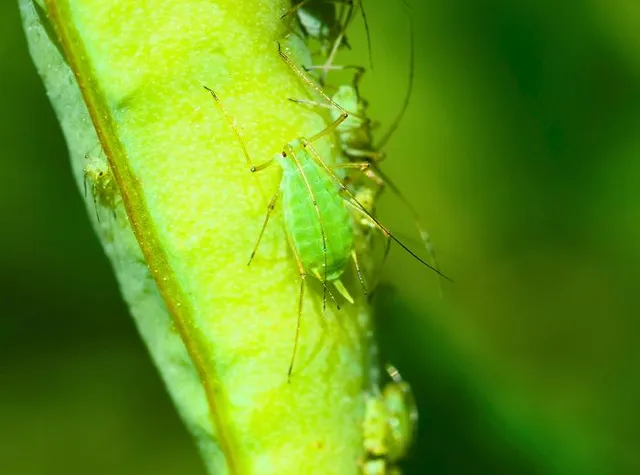
The short answer: winter is the smart time to get on top of scale, aphids and other sap-suckers on your citrus and fruit trees. A thorough spray of botanical or horticultural oil smothers the soft-bodied pests and the overwintering stages clinging to your stems and leaf undersides, knocking populations down before they explode on the soft new growth in spring. Oil works on contact by suffocating the insect, so coverage is everything, and a mild, frost-free winter day is the ideal window. Hit them now, and you head off the sticky honeydew, black sooty mould and stressed trees that show up later.
Here is how to do it properly through an Australian winter.
Why scale and aphids are still on your citrus in winter
It is easy to assume pests pack up and leave when it gets cold. They do not. Many of the worst citrus pests simply slow down and overwinter right there on the tree, waiting for the warm spring flush to breed up in earnest.
Scale are small, limpet-like bumps you find stuck along stems and on the underside of leaves, sitting under a hard or waxy cover while they quietly suck sap. On Australian citrus there are two you are most likely to meet. Red scale is a small reddish-brown circular cap about 2mm across, an armoured scale found in every citrus-growing area of Australia and widely regarded as the most damaging scale on citrus here. Soft brown scale is a flat, oval, yellow-brown scale that is common in the tropical and subtropical citrus areas, which includes south-east Queensland. The soft brown one is the messier of the two, because it excretes the sticky honeydew that black sooty mould then grows on. You often notice that side effect, sticky leaves and a black film, before you spot the insect itself. Australian state agriculture authorities publish detailed identification and management notes on both (Business Queensland: Red scale, NSW DPIRD Citrus).
Aphids are tiny soft-bodied insects that cluster on the newest shoots and the backs of leaves, distorting growth and also producing honeydew. They are one of the classic targets for oil sprays.
Why they linger: citrus is evergreen, so unlike a bare deciduous tree it gives these pests leaves and stems to shelter on all winter. Knock the overwintering population down now and there is simply less to breed up when the weather warms.
Why oil, and why winter is good timing
Horticultural and botanical oils are one of the oldest and most reliable tools for soft-bodied pests, and they work in a refreshingly simple way: the oil coats the insect and smothers it, blocking the breathing pores so it suffocates. Because the oil has to physically touch the pest, thorough coverage is everything. International horticultural research describes oils as most effective against exposed eggs, immature stages and soft-bodied insects including scales, aphids, whiteflies and mealybugs, and notes that an application targeting overwintering pests can reduce the numbers that would otherwise build up later (University of Nevada Reno Extension).
That is the case for acting in winter. You are not waiting for a heavy infestation in the warmer months. You are reducing the starting population while it is concentrated and exposed on the tree.
One honest limitation worth knowing. Oil is a contact spray with no lasting residual, so it only kills what it actually touches and coats. For armoured scale in particular, oil works best on the young mobile "crawler" stage, because contact sprays struggle to penetrate the hard waxy shell of mature scale. That is why thorough coverage matters and why a follow-up spray is often needed. Always check that any product is registered for your use and follow the label, since in Australia registered uses and rates are managed by the Australian Pesticides and Veterinary Medicines Authority (APVMA).
How to spray oil on citrus the right way
- Inspect first. Turn leaves over and run your eye along the stems. Look for raised bumps (scale), clusters of soft insects on new shoots (aphids), sticky leaves, or black sooty mould. That tells you where to concentrate.
- Pick a mild, still, frost-free day. Avoid spraying when frost is forecast. The UC IPM citrus guidance warns that oil applied in the cooler months carries some risk of increasing frost damage, so spray on a mild day with no frost on the way (UC Statewide IPM Program). Avoid spraying in the heat of the day too.
- Mix to the label rate. Oils are effective at low rates, but follow the product label exactly.
- Cover everything, especially the undersides. Oil only works where it lands. Spray to thoroughly coat stems, both leaf surfaces, and the leaf undersides and twig terminals where scale and aphids concentrate.
- Repeat if needed. One pass knocks down what it touches. A follow-up spray catches survivors and newly hatched crawlers. Check the label for minimum re-spray intervals.
The product that does this job: Eco-Oil
Eco-Oil is a registered organic botanical oil that does exactly this. It controls scale, aphids, two-spotted mite, whitefly, mealybugs and citrus leafminer, which covers nearly every sap-sucker likely to be overwintering on your citrus. A few reasons it suits the home grower:
- 100% plant oils, no petroleum derivatives, with a reduced risk of foliage burn
- Safe on edibles with no withholding period, so you can spray and pick from the same tree
- Safe for beneficial insects like bees, ladybeetles and lacewings, and its HIPPO-enhanced formula actually attracts beneficials back into the garden
- Certified organic and Australian made
It comes in everything from a 250mL bottle up to bulk sizes, so a small bottle is plenty for a couple of backyard citrus. If you would rather a different organic option, Eco-Neem is a botanical alternative that also targets a broad range of pests. You can compare the full range in our garden insecticides category, and pair it with a clean, well-maintained sprayer from our sprayers range for even coverage.
A simple winter citrus pest routine
- Inspect now. Check stems and leaf undersides for scale, aphids, honeydew and sooty mould.
- Spray oil on a mild day. Cover thoroughly, both leaf surfaces and all stems, avoiding frosty or hot conditions.
- Deal with the ants. Ants farm scale and aphids for honeydew and protect them from predators. If you see ants marching up the trunk, managing them helps your beneficial insects do their job.
- Let the sooty mould fall away. Once the sap-suckers are gone, the black mould loses its food source and gradually weathers off. No need to scrub it.
- Re-check in a few weeks. A second spray catches survivors before the spring flush. Going into spring with low pest numbers is the whole goal.
Citrus also feeds up heading into spring, but resist the urge to push lots of soft new growth in the cold, since that tender flush is exactly what aphids and other pests target first. Time your bigger feed for when the soil warms.
Frequently asked questions
Should I spray my citrus tree in winter?
Yes, winter is a good time to knock down overwintering scale, aphids and other sap-suckers with a horticultural or botanical oil, before they breed up on the spring flush. Spray on a mild, frost-free day and cover the stems and leaf undersides thoroughly.
What is the sticky stuff and black coating on my citrus leaves?
The sticky film is honeydew, a sugary substance excreted by sap-sucking insects like scale, aphids and whitefly. The black coating is sooty mould, a fungus that grows on the honeydew. Control the insects and the mould loses its food source and falls away over time.
Does oil spray kill scale on citrus?
Oil controls scale by smothering it, and it is most effective on the young, mobile crawler stage. The two common citrus scales in Australia are red scale (a hard, armoured scale) and soft brown scale (a soft scale that produces honeydew). Contact sprays struggle to penetrate the hard shell of mature armoured scale, so thorough coverage and a repeat spray give the best result.
Is Eco-Oil safe to use on fruit and vegetables?
Eco-Oil is registered organic and has no withholding period, so produce can be picked and eaten the same day it is sprayed. It is also safe for beneficial insects like bees and ladybeetles when used as directed. Always follow the product label.
Will oil spray harm bees and ladybeetles?
Botanical oils like Eco-Oil are considered safe for beneficial insects such as bees, ladybeetles and lacewings when used as directed, because they work on contact and have no lasting residual. To further protect bees, avoid spraying open flowers and spray in the cooler part of the day.
Sap-suckers taking over your citrus this winter? Shop Eco-Oil or browse the full range of garden insecticides at The Garden Superstore.
Dealing with other citrus pests too? See our guides on controlling citrus gall wasp and battling fruit flies.