

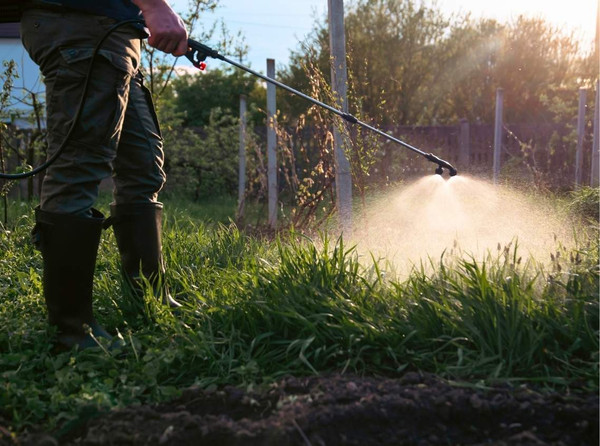
Short answer: apply pre-emergent while your soil temperature is still under roughly 14°C and climbing. That is the point summer grass, crab grass and crowsfoot begin to germinate, and it lands on a different date every year, in every state, and even between your front yard and your back.
Every spring the same thing happens. You put your pre-emergent down on the date you did it last year, and summer grass turns up anyway. The problem is almost never the product. It is the timing. Weed seeds do not go by the calendar, and neither should you.
The short version
- A pre-emergent stops weed seeds before they sprout. It will not kill weeds that are already up.
- Summer grass, crab grass and crowsfoot germinate once average soil temperature climbs past roughly 14°C. That is the trigger, not a date.
- Take a soil temperature reading rather than working off last year's calendar. Under 14°C and you have your window.
- Barricade HG gives up to six months of control from a single application. One 250mL bottle treats up to 830 m² of established lawn.
- Water it in with at least 3 mm within 24 hours to activate the barrier, and keep it off any lawn you have just laid or seeded.
- Pair it with grub protection, a soil wetter and a feed for a full spring set-up.
What a pre-emergent actually does (and what it can't)
A pre-emergent does not kill the weeds you can see. It works underground. It lays a thin barrier through the top layer of soil that stops weed seeds developing as they try to germinate. Barricade HG binds to the top 1 to 2 cm of soil and holds there, so summer weeds like summer grass, crab grass and crowsfoot never get established.
The catch is simple. If a weed is already up and growing, a pre-emergent will not touch it. Those ones need a post-emergent herbicide instead. Not sure which weed you are dealing with? Our Weed Problem Solver identifies it and tells you what controls it.
So the whole job comes down to one thing: getting the barrier down before the seeds wake up.
Why the calendar is the wrong way to time it
Weed seeds respond to the soil warming as winter lets go, and that shifts from year to year, from suburb to suburb, and even between the front yard and the back. A fixed date cannot keep up with that.
Go too early and the barrier can thin out before the seeds germinate. Go too late and the weeds are already through, past the point a pre-emergent can help. The date you used last year tells you nothing about either.
The number to time it to: 14°C
Summer grass, crab grass and crowsfoot start germinating once average soil temperature climbs past roughly 14°C. Winter weeds work in reverse, germinating as soil temperature drops back below the same mark, which is why winter grass is an autumn job rather than a spring one.
So the question is not what month it is. It is what your soil is sitting at right now.
How to take the reading
You need a soil thermometer, not an air temperature. Air runs weeks ahead of the ground, which is why a run of warm afternoons fools so many people into going too early or assuming they still have time.
- Push the probe in to about 50 mm, in the sunniest part of the lawn. That patch warms first and will germinate first.
- Read it at the same time each day. Mid-morning is the easiest to be consistent about.
- Take it across three consecutive days and look at the trend, not the single number. One warm day proves nothing.
What your reading means
- Under 14°C. This is your window. The seeds are still dormant and you have time to get the barrier down and watered in before they stir.
- Around 14°C and climbing. You are on the edge. A barrier down this week still catches the bulk of the flush, but every warm day from here costs you some of it.
- Well above 14°C, or weeds already showing. The first flush is through. Deal with what is up using a post-emergent, then lay the barrier for the next flush.
Grass type shifts this a little, and a shaded or south-facing lawn will lag a sunny one by a week or more. If you are unsure how to read your own result, call us on 1800 670 790.
When to start checking, by region
This table does not tell you when to apply. Only your thermometer does that. What it tells you is when to start taking readings, because soil warms from north to south and from the coast inland, and the region you are in changes how much warning you get. In an unusually warm or late year every row below shifts by a fortnight either way, which is precisely why the reading is the answer and this is only the reminder.
| Region | Typical cities | Start taking readings | What to watch for |
|---|---|---|---|
| Subtropical east coast | Brisbane, Sunshine Coast, Gold Coast, northern NSW | Late winter | Soil here passes 14°C earliest and fastest. This is the region most likely to miss the window by waiting for spring to feel like spring. |
| Warm temperate | Sydney, Perth, Adelaide | Late winter | Readings can climb quickly through a run of mild days, so check every day rather than weekly once you start. |
| Cool temperate | Melbourne, Canberra, Hobart, inland NSW and Victoria | Early spring | You usually get a longer run-up, but frost-prone and inland gardens lag the coast, and a warm early spring can close the gap fast. |
| Tropical north | Darwin, Cairns, Townsville | Call us first | Soil rarely drops below the threshold at all, so timing follows the dry to wet transition and the first storms rather than a temperature climb. |
Whichever row you are in, the decision is the same one: take the reading at 50 mm across three consecutive days, and go while you are still under 14°C.
When to put Barricade HG down
Early spring, before last summer's weeds reappear, and timed to your reading rather than the calendar. If summer grass or crowsfoot took hold through the warm months last year, the seed bank is already in your soil waiting on the same trigger.
One application of Barricade HG lasts up to six months, so a single well-timed pass covers you right across the weed season. Always read the full product label before you start. The label and safety data sheet are on the Barricade HG product page under Information Sheets, and you can confirm the registration on the APVMA public register.
Barricade HG at a glance
- Active: 480 g/L prodiamine, Group 3 herbicide
- APVMA registration: 93901
- Coverage: one 250mL bottle treats up to 830 m² of established lawn
- Registered lawn types: buffalo, carpet grass, couch, kikuyu, zoysia, paspalum
- Residual: up to six months from one application
Barricade HG application rates
| Situation | Method | Rate | Water volume | Water in |
|---|---|---|---|---|
| Established lawns and turf | Garden sprayer | 30 mL per 100 m² | 10 L | Minimum 3 mm within 24 hours |
| Established lawns and turf | Watering can | 3 mL per 10 m² | 9 L | Minimum 3 mm within 24 hours |
| Garden beds, before mulching | Garden sprayer | 40 to 80 mL per 100 m² | 10 L | Immediately after application |
| Garden beds, before mulching | Watering can | 4 to 8 mL per 10 m² | 9 L | Immediately after application |
How to apply it, step by step
- Take your reading. Confirm you are still under or around 14°C before you buy or mix anything. If the first flush is already through, you need a post-emergent first.
- Mow and clear. Mow a few days beforehand and clear off leaves and debris so the product reaches the soil rather than sitting in the thatch.
- Prep the soil to take up water evenly. If your lawn sheds water or dries out in patches, a soil wetter like Better Wetter helps moisture, and the barrier, spread evenly instead of running off. More on that in our guide to wetting agents versus water crystals.
- Measure your lawn and your rate. Use our lawn and garden size calculator and application rate calculator so you mix the right amount for your area, with no guesswork.
- Check your sprayer. An uncalibrated sprayer is the difference between an even barrier and a striped one. Our sprayer calibration calculator sorts it in a few minutes, and we stock sprayers and knapsacks if yours has seen better days.
- Mix and apply evenly. Barricade HG is a liquid concentrate. Mix 30 mL into 10 L of water for every 100 m² of established lawn and apply through a garden sprayer, keeping your pace steady so you do not double up or miss strips. For smaller areas, use 3 mL in 9 L of water per 10 m² through a watering can.
- Water it in. A minimum of 3 mm within 24 hours activates the barrier and locks it into the top of the soil. Skimp on this and the barrier never forms properly, which is the most common reason an application fails.
- Leave it be. Avoid heavy raking or digging that breaks the barrier, and feed a few days later rather than at the same time. Do not blend Barricade HG with granular fertiliser or any other granular product. Apply each on its own.
When not to apply
- Not if heavy rain is expected within 48 hours, and not onto waterlogged soil.
- Not on stressed or struggling lawn. Get it healthy first, then protect it.
- Not over the top of mulch. On garden beds the product needs to reach the soil surface before you mulch.
- Not in the vegetable garden or around fruit trees.
- Not anywhere you intend to sow seed within the next six months. Prodiamine does not distinguish between weed seed and lawn seed.
Finish the job: grubs, water and feed
Weeds are only half the spring story. The same early-spring window is the time to get ahead of lawn grubs and armyworm, before they hatch and start chewing through the roots.
Acelepryn GR gives up to six months of grub protection from one application, spread on with a standard fertiliser spreader. It is the home version of the product professionals rate, so you get the same result without the guesswork. Our guide on stopping lawn grubs, curl grubs and armyworm walks through the timing.
Round it out with a soil wetter so the lawn drinks properly through the heat, and a feed such as FloraFert TurfStar Hi-N a few days after the pre-emergent to push healthy growth. Do all of this in the same fortnight and your lawn heads into summer set up to win. If you want to stay ahead of the heat, our summer survival guide and our piece on liquid seaweed for lawns pick up where this leaves off.
Can you use it on a new or patchy lawn?
Not on fresh lawn. Barricade HG stops seeds germinating, and that includes lawn seed, so keep it off anywhere you have recently seeded, laid, or plan to over-sow within the next six months. If you are patching bare areas with grass seed this spring, do that first and leave the pre-emergent until the following season. On newly laid turf, wait until it is fully established and rooted in before you apply.
It is also best kept off a lawn that is stressed or struggling. Get the lawn healthy first, then protect it. On an established, healthy lawn of buffalo, carpet grass, couch, kikuyu, zoysia or paspalum it is right at home, though it is always worth checking the label for your particular lawn type.
Shop Barricade HG and get your barrier down before the weeds come up.
Frequently asked questions
When should I apply pre-emergent in Australia?
Time it to soil temperature, not to a date. Summer grass, crab grass and crowsfoot germinate once average soil temperature climbs past roughly 14°C, so the application needs to be down and watered in before your soil reaches that mark. Take a reading at 50 mm depth, at the same time each day, across three consecutive days, and go while you are still under 14°C.
What soil temperature should I apply pre-emergent at?
Under 14°C and climbing. That gives the barrier time to bind and activate before summer weed seeds germinate. At 14°C you are on the edge and should apply immediately. Well above it, the first flush is likely already through and you will need a post-emergent for what is up before laying a barrier for the next flush.
When should I apply pre-emergent in Queensland?
Earlier than most of the country. Subtropical soil around Brisbane and the Sunshine Coast passes 14°C well before the southern states, so start taking readings in late winter. Waiting for spring proper is the most common way Queensland lawns miss the window.
When should I apply pre-emergent in Melbourne or Victoria?
Later. Cool temperate soil takes longer to reach 14°C, so early to mid spring is the usual window, and inland and frost-prone areas lag the coast by a week or two. Take the reading rather than assuming, because a warm early spring can bring it forward.
Will pre-emergent kill the weeds I already have?
No. A pre-emergent stops weed seeds from developing as they germinate. It has no effect on weeds already up and growing, which need a post-emergent treatment instead.
How long does Barricade HG last?
Up to six months from a single application, so one well-timed pass covers the whole summer weed season.
How much area does one bottle cover?
One 250mL bottle treats up to 830 m² of established lawn at the 30 mL per 100 m² rate. Measure your lawn first with our lawn and garden size calculator so you order the right amount.
Can I apply it to a new lawn?
No. It stops lawn seed germinating too, so keep it off anywhere recently seeded, laid or due to be over-sown within six months, and wait until new turf is fully established.
Can I fertilise at the same time?
Apply your pre-emergent first and water it in, then feed a few days later. Applying both at once means the fertiliser irrigation can move the barrier before it has bound to the soil.
Does Barricade HG work on winter grass?
Yes, but that is an autumn application rather than a spring one. Winter weeds germinate as soil temperature drops back below roughly 14°C, so the same reading tells you when to go, just from the other direction.
What if it rains after I apply it?
Light rain is fine and does the watering-in for you. Do not apply if heavy rain is forecast within 48 hours, or onto waterlogged soil, because runoff can move the product before it binds to the top layer of soil.
Get your barrier down before the soil warms past 14°C, and you will spend summer enjoying the lawn instead of fighting it. Let's Grow!
Reviewed for agronomic accuracy by Patrick Gorman, agronomist, The Garden Superstore. Last updated 2 September 2026.