

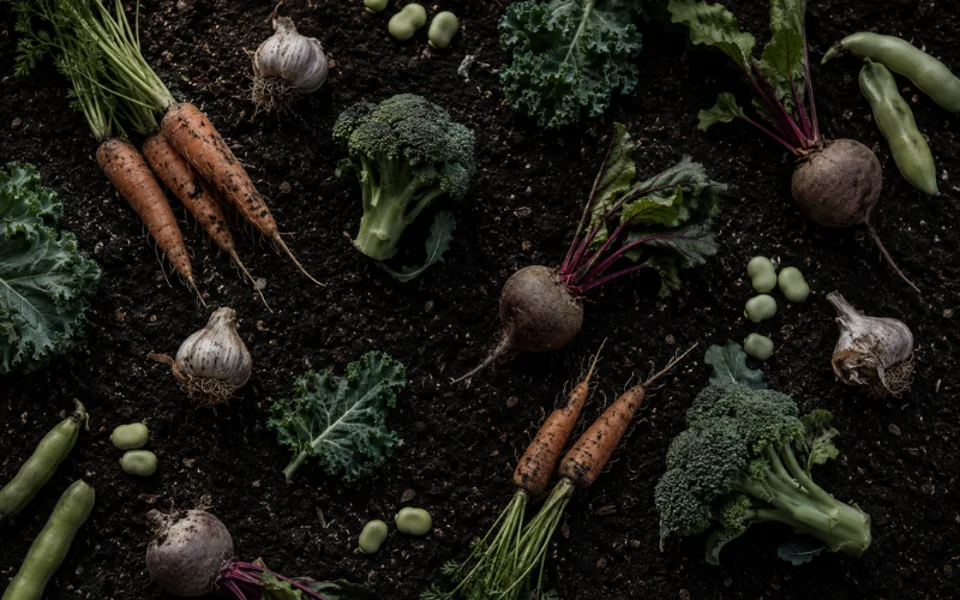
What to Plant in May: Your State-by-State Vegetable Guide for Australia
The window is open. Here's exactly what to do before it closes.
May is the most important month in the Australian vegetable garden. Not October. Not March. May.
It's the month where cool nights and mild days collide with still-warm soil to create conditions that most vegetables can't resist. Get your crops in now and you'll be harvesting through winter. Miss the window and you'll spend June watching seeds stall in cold, reluctant ground.
Almost half of all Australians are growing their own food. The ones who get a real harvest know this: it's not about the variety you choose. It's about the timing.
This guide covers what to plant, state by state, and why the next few weeks matter more than any other time of year. If you want a broader view of what the cooler months demand from your garden, our Autumn Gardening 101 guide covers the full picture — soil, feeding, and timing — from March through May.
Why May Is Different
Cool-season vegetables — brassicas, legumes, alliums, root crops — need three things to establish well: cool nights, mild days, and warm soil. May delivers all three simultaneously.
By June, that equation breaks down. Soil temperatures drop, and once they fall below around 7°C, most seeds will not germinate reliably — a threshold documented extensively in horticultural research from the Royal Horticultural Society. Seedlings that haven't anchored yet struggle to catch up. Root crops planted too late produce small, underwhelming yields. Garlic planted in July produces smaller bulbs than garlic planted in May.
Australia's climate zones vary enormously — the Bureau of Meteorology's climate classification maps show just how different the conditions are from tropical Queensland to alpine Tasmania. Understanding which zone you're in determines how urgently you need to move.
The window is narrow, it's real, and it's open right now.
Queensland: You're in the Sweet Spot
Queensland gardeners have something the southern states envy every autumn: a growing season that runs almost the full year. But May is still your best window.
Plant now: Broccoli, cauliflower, cabbage, kale, silverbeet, peas, broad beans, garlic, onions, carrots, beetroot.
This is as good as it gets for QLD vegetable growing. The heat has backed off, humidity is dropping, and your soil has retained enough warmth for fast germination. Brassicas planted in May in south-east Queensland will head up beautifully by late winter.
What works best: Direct sow carrots and beetroot now. Transplant brassica seedlings into well-prepared beds. Get garlic cloves in before the end of the month, pointy end up, 5cm deep, 10–15cm apart.
Don't overlook: Asian greens including bok choy and pak choy are exceptional performers in Queensland's May conditions. Fast-growing, nutritious, and ready to harvest in as little as six weeks.
New South Wales: Last Call
NSW gardeners, this is not a drill.
Garlic and onions go in now. Peas and broad beans go in this week if you want them to make it. Every day you wait is a day of establishment time you won't get back.
Plant now: Garlic, onions, peas, broad beans, silverbeet, spinach, lettuce, kale, broccoli, cauliflower, cabbage, snow peas, carrots, beetroot.
The coastal regions of NSW — Sydney, the Hunter, the Illawarra — have mild winters that support a surprisingly diverse range of cool-season crops. Inland areas including the Blue Mountains and Southern Highlands will see genuine frosts by June, so prioritise cold-hardy varieties and get them in while soil is still workable.
Timing reality check: Broad beans planted in May in coastal NSW will be ready to harvest around September. Planted in July, they'll still produce, but later and lighter. The maths always favour getting in early.
Victoria: Garlic and Broad Beans, Now
Victoria's window is tighter than most gardeners realise. Soil temperatures in Melbourne drop significantly through May, and inland Victoria cools even faster.
Plant now: Garlic, broad beans, leeks, cabbage, kale, silverbeet, spinach, peas (early in the month), onions, Brussels sprouts.
Get garlic and broad beans in before the soil gets any colder. These are your two most time-sensitive crops. Garlic needs time to put down roots before dormancy, and those roots determine bulb size come harvest time. Broad beans started in cold soil take significantly longer to germinate and often produce patchy results.
For Melbourne gardeners: Leeks are one of Victoria's great winter vegetables. Slow to grow but utterly reliable, they'll be ready to harvest through the back half of winter when the garden can feel bare. Plant them now alongside your garlic.
Frost protection: Spend cold or rainy days in May making frost covers from shade cloth offcuts. A couple of garden stakes and some hard yakka will see these covers ready when the temperature plummets. For everything else you need to know about keeping plants alive through the cold months, our winter gardening guide covers frost protection, mulching, and maintenance in full.
South Australia: Work Fast
South Australia's diverse climate — from Adelaide's relatively mild conditions to the cooler Adelaide Hills and beyond — means May planting windows vary significantly depending on where you are.
Plant now (Adelaide and surrounds): Garlic, broad beans, peas, broccoli, cauliflower, cabbage, leeks, onions, spinach, silverbeet, beetroot, carrots, lettuce.
Adelaide Hills and higher elevations: Prioritise cold-hardy varieties. Focus on garlic, broad beans, kale, and leeks. Your frost risk arrives earlier than metro Adelaide, so concentrate on crops that will shrug off the cold rather than just tolerating it.
In these cooler zones, root and bulb crops perform particularly well. Garlic planted now will establish roots before winter sets in and can be harvested in spring. Leeks are slow-growing but worth the wait, offering a deliciously mild flavour that suits everything from soups to stir-fries.
Western Australia: The Long Season Advantage
Perth's Mediterranean climate is one of the best in the country for winter vegetables. Mild, reliable winters mean your growing window extends further than most of Australia, but May remains the prime planting month.
Plant now: Broccoli, cauliflower, cabbage, peas, snow peas, spinach, silverbeet, kale, garlic, onions, carrots, beetroot, lettuce, leeks, celery.
These regions enjoy relatively mild winters, making them ideal for growing hardy greens and legumes. Broccoli thrives in cool weather, providing a nutritious harvest by mid-winter. Snow peas are another excellent choice, growing quickly and producing crisp, sweet pods.
Perth gardeners can also push into some crops that would struggle further south — Asian greens, coriander, and parsley all thrive in WA's May conditions.
Tasmania and the ACT: Cold Climate Strategy
If you're gardening in Hobart, Canberra, or any high-altitude area, your approach to May needs to be strategic.
Cool and mountainous regions can grow beetroot, broad beans, broccoli, Brussels sprouts, bok choy, pak choi, cabbage, cauliflower, celery, coriander, fennel, garlic, herbs (all except basil), kale, lettuce, parsnip, peas, rocket, radish, silverbeet, spinach, spring onion, swede, and turnip in May.
The reality: Cold climate gardeners need to move quickly. Early May is your best chance. By late May, soil temperatures in Hobart and Canberra may already be approaching the critical lower threshold for reliable germination. If you're starting from seed, consider seed trays in a protected spot — shed, glasshouse, or even a sunny window — to get germination happening before transplanting to garden beds.
Frost cloth is not optional in these climates. It's essential.
Choosing the Right Crops: Don't Just Plant What Everyone Else Plants
Not every crop suits every garden, even within the same state. Aspect, soil type, water access, and how much time you have to manage the patch all affect which vegetables will perform best for you.
If you haven't already, our crop selection guide for autumn walks through how to match crop choices to your specific conditions — including which brassicas are most forgiving for first-timers, and which crops reward the extra effort.
Bed Preparation: What the Soil Needs Before You Plant
Getting crops in on time is half the job. Getting them into properly prepared soil is the other half.
For May planting, work through this checklist before your seedlings go in:
Compost and organic matter. Cool-season vegetables are heavy feeders. Fork in a quality compost or aged manure before planting to build organic matter and improve both moisture retention and drainage. The Searles Premium Organic Compost Mix is a solid all-rounder — certified organic, boosted with fish and seaweed, and it improves soil structure in both clay and sandy beds.
Controlled-release fertiliser. One application at planting feeds your crops through the full winter growing season without constant top-ups. Mix Osmocote Landscape Formula into the backfill before planting — it releases nutrients gradually in response to soil temperature, which means more when the plant is growing and less when it's cold. Exactly what winter crops need.
Soil structure. Heavy clay soils stay wet and cold through winter, stalling establishment. Sandy soils drain too fast and struggle to hold nutrients. If either describes your beds, incorporating coco coir at 30–50% by volume improves aeration, moisture retention, and root penetration without the limitations of traditional bark-based mixes. For vegetables in raised beds, a 50% coir, 30% compost, 20% perlite blend outperforms most off-the-shelf potting mixes. Browse the full growing media and soil amendments range to find the right base for your setup.
The One Thing Commercial Growers Do Differently
Here's something most home gardeners don't know: professional nurseries and commercial vegetable growers apply seaweed extract at every planting. Not sometimes. Every time.
It's not a trend. It's backed by decades of peer-reviewed research. A study published in Plants (MDPI) found that seaweed extracts improve seed germination, root development, photosynthesis, biomass accumulation, and yield performance — and specifically that they promote freezing tolerance and winter hardiness through enhanced root morphology and osmoprotectant accumulation. Separately, research published via PubMed Central (NIH) confirmed that seaweed extracts applied to plants subjected to low root zone temperatures improved root length density and uptake of macro- and micronutrients — exactly the conditions May plantings face.
For May planting, that cold stress tolerance is the key benefit. Cool autumn soil is hard to establish roots in. A seaweed extract drench at planting gives new seedlings and garlic cloves a biochemical head start — stimulating root initiation, improving nutrient uptake, and reducing transplant shock at the exact moment the plant is most vulnerable.
A bigger, healthier root system makes a plant more frost and drought tolerant. One application at planting. That's the commercial grower's edge, available to every home gardener.
Want to understand exactly why seaweed works and how to get the most from it? Read our deep-dive on liquid seaweed benefits for lawn and garden — it covers the science, timing, and application rates in plain language.
Seaweed Master Liquid Seaweed — the same product professional nurseries use, available for home gardeners.
Once plants are established, keep them fed with a liquid fertiliser every two to three weeks through winter. Brassicas in particular respond well to consistent liquid feeding — it keeps them productive rather than just surviving the cold.
Don't Forget the Lawn
May is also the last window to give your lawn what it needs before winter sets in. Cool-season lawn care is different to summer maintenance, and getting it wrong means a slow, patchy recovery come spring.
Our winter lawn care guide covers exactly what to do now — from feeding and aeration through to what to avoid when the soil cools down.
May Planting: Quick-Reference by State
| State | Priority Crops | Don't Miss |
|---|---|---|
| QLD | Broccoli, cauliflower, peas, garlic, carrots | Asian greens, beetroot |
| NSW | Garlic, onions, peas, broad beans | Silverbeet, snow peas |
| VIC | Garlic, broad beans, leeks | Cabbage, kale |
| SA | Garlic, broccoli, peas, spinach | Leeks, carrots |
| WA | Broccoli, snow peas, garlic, lettuce | Celery, parsley |
| TAS/ACT | Broad beans, garlic, kale | Silverbeet, radish |
Frequently Asked Questions
When is the best time to plant garlic in Australia?
May is the optimal planting month for garlic across most of Australia. QLD gardeners can plant through May and into June. NSW and VIC gardeners should prioritise May to allow root establishment before the coldest soil temperatures arrive. TAS gardeners should aim for early May.
Can I still plant peas in May in Victoria?
Early May, yes. Later in the month, conditions become marginal. If you're planting peas in Victoria past mid-May, choose a fast-maturing variety and consider starting in seed trays rather than direct sowing.
What vegetables grow fastest in autumn in Australia?
Radishes are the fastest-maturing vegetable in the autumn garden, ready in as few as 25–30 days. Spinach, Asian greens, and rocket also establish and produce quickly — useful for filling gaps between slower brassica and legume crops.
Do I need to fertilise winter vegetables?
A good starting compost or well-aged manure worked into beds before planting covers most nutrient needs for winter crops. A seaweed extract drench at planting supports root development. Once plants are established, a liquid fertiliser applied every two to three weeks will keep brassicas in particular producing well through the cold months.
What should I plant in May in Queensland?
Queensland gardeners are in their prime growing window. Plant broccoli, cauliflower, cabbage, kale, silverbeet, peas, broad beans, garlic, onions, carrots, and beetroot. This is QLD's best growing period of the year.
How do I know which crops suit my garden specifically?
Aspect, soil type, and local microclimate all affect what performs well. Our crop selection guide for autumn walks through how to match varieties to your conditions, including which crops are most forgiving for new vegetable gardeners. The Bureau of Meteorology's climate zone maps are also a useful reference for understanding your region's exact conditions.
Don't Wait
The crops that perform best in the winter garden — brassicas, legumes, alliums, root crops — all share one characteristic: they need time to establish. Every week of delay is establishment time you can't recover.
The soil is warm enough now. The nights are cool. The conditions are right.
Get it done.
Shop Seaweed Master Liquid Seaweed | Browse Fertilisers | Garden Shop
The Garden Superstore supplies the same commercial-grade growing media and plant nutrition that professional nurseries and growers use. Yandina, Queensland.